

Wed 6 August 2025
Spain News | The Jabalí (Wild Boar) in the Marina Alta- Living in harmony with nature!


One of the Oldest Wild Inhabitants in the Marina Alta- The Jabalí.
My morning walk started early this morning! 6.30am is the best time to get some serious exercise in, both for me and my pointer, Sunny. We can pick up the pace through the vineyards and rack up our step count before the temperature starts to rise. Something struck me this morning as we hit the track around the mountain. There were large mounds of earth that had been dug up, exposing tree roots and displacing some of the stonework on the bancales (the walls that define the different levels on the mountain side).
If you live here in the Marina Alta, and like to walk in the countryside you will have seen this before and you are probably aware that this damage is caused by the native Wild Boar (in Spanish -Jabalí). The jabalí are part of Spain´s fauna and an important part of the natural ecosystem in the area.
In the past few decades their numbers have increased greatly, They are prolific breeders and they are amazingly strong and adaptable to changing environments. They are the ancestor to most breeds of pig so they´ve been around for a long time!

Their natural diet is foraged from the forest and includes; acorns, beechnuts, chestnuts and other forest fruits, as well as insects and small animals. Their adaptability means that they modify their behaviour and diet according to the environment. An older Spanish local told me that the Jabalí, up until only a few decades ago, did not eat oranges and now they eat any kind of fruit, vegetable and cultivated crops.
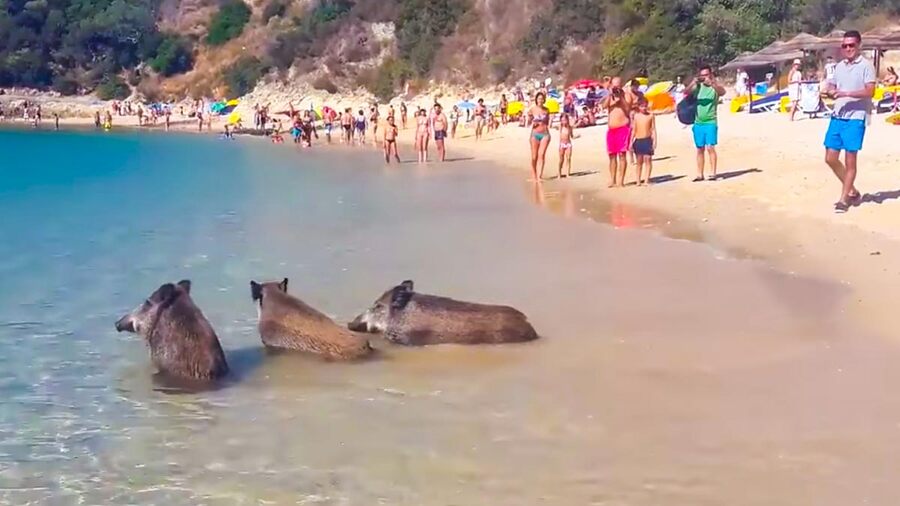
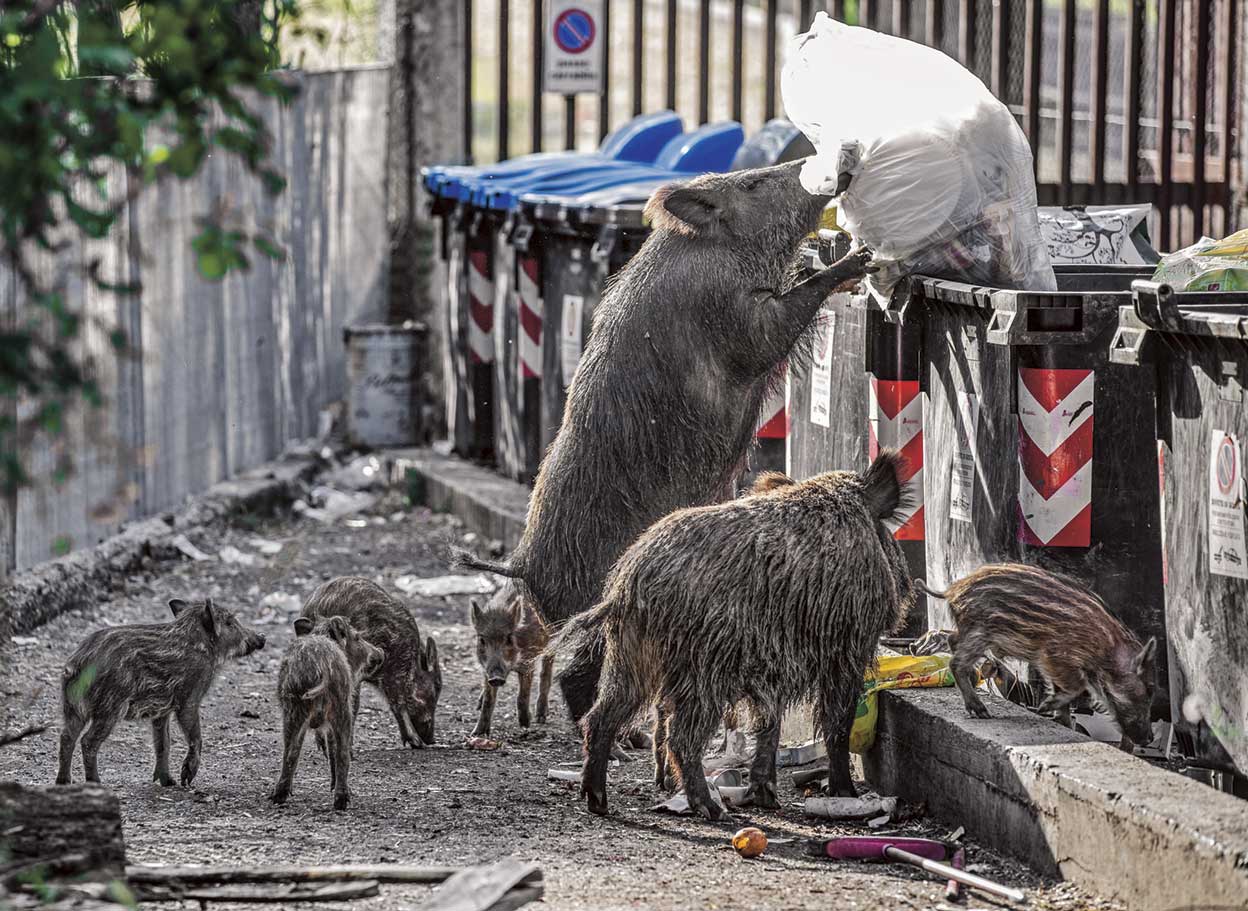
The adaptability of the jabalí also means that they are fast beginning to realise that human habitats usually mean easy pickings for dinner. Whereas the boar used to live and feed only in the countryside, now they are a common sight in urban areas where there is a steady supply of leftovers!
The only natural predator of the jabalí is the Iberian wolf, which has died out everywhere but in the North West of Spain ie Galicia, Asturias and Castilla y Leon. Although recently there have been wolves reported in Navarre and the Basque Country.
So, here in the Marina Alta, the jabalí has no predator other than the human hunters. The hunting societies are relied on heavily to cull the population and they do this during the months of October and February. Whereas, in years gone by, the hunt used to decimate the population of boar, recent laws have introduced regulations to monitor and control the shooting, making the hunt accountable. Also, every animal shot and killed must be tested for disease. This means that there is no longer any financial gain to be had from selling the carcasses to restaurants and hostelry, as they did years ago.
Why do the Jabalí get such a bad press?
- Agricultural damage- The boar has a natural instinct to dig into the ground to find the tender young shoots of vegetation, roots and insects. They are indiscriminate and ruthless in their search and this can ravage crops, vineyards, fruit orchards and vegetable patches.
- Damage to property- On their travels they can destroy fences, walls and country roads causing damage and untold inconvenience to land and home owners.
- Traffic accidents- The Jabalí can be seen crossing roads at night and this causes many minor accidents and sometimes more serious. It pays to drive slowly and carefully if you are on the country roads at night time. We have friends who had a collision with a large adult Jabalí. There was serious damage to the car and the Boar looked to be fatally wounded in the road. By the time they assessed the damage to the car, the Boar had recovered and made a hasty exit, the car was a write off!
- Danger to other animals and humans- Boar attacks are very rare. The boar is naturally shy and they fear us far more than we fear them. However, if the animal feels threatened, they can attack. The females can be fiercely protective if they have young piglets and, although the adult male is normally a solitary animal, they too can be aggresive. The only aggression we have heard of, in recent years here in the Marina Alta, has been towards dogs. Due to a dog´s natural curiosity they will pursue the boar and dog attacks are not uncommon, we have friends whose dogs bear the scars of a battle with the jabalí! As far as human attacks, they are almost unheard of in this part of Spain.
- The spreading of disease- Jabalí can carry Tuberculosis, Brucellosis and Swine Fever. If populations continue to grow unchecked these diseases will become more common and may spread to other species.
If you happen to come across the Jabalí while you are out walking my advice is to stand still. If they are heading in your direction, back away and go slowly in the other direction. By all means watch and enjoy, but don´t try to engage them. If you have a dog with you, put it on the lead and try to prevent barking or charging at them. If they show aggression towards the dog, let your dog loose and hope it can outrun them. Any sudden movement could be seen as a threat so keep still or climb up a tree or onto a boulder. I should stress here, human attacks are extremely rare, they are not looking for a fight, they just want to be left in peace!
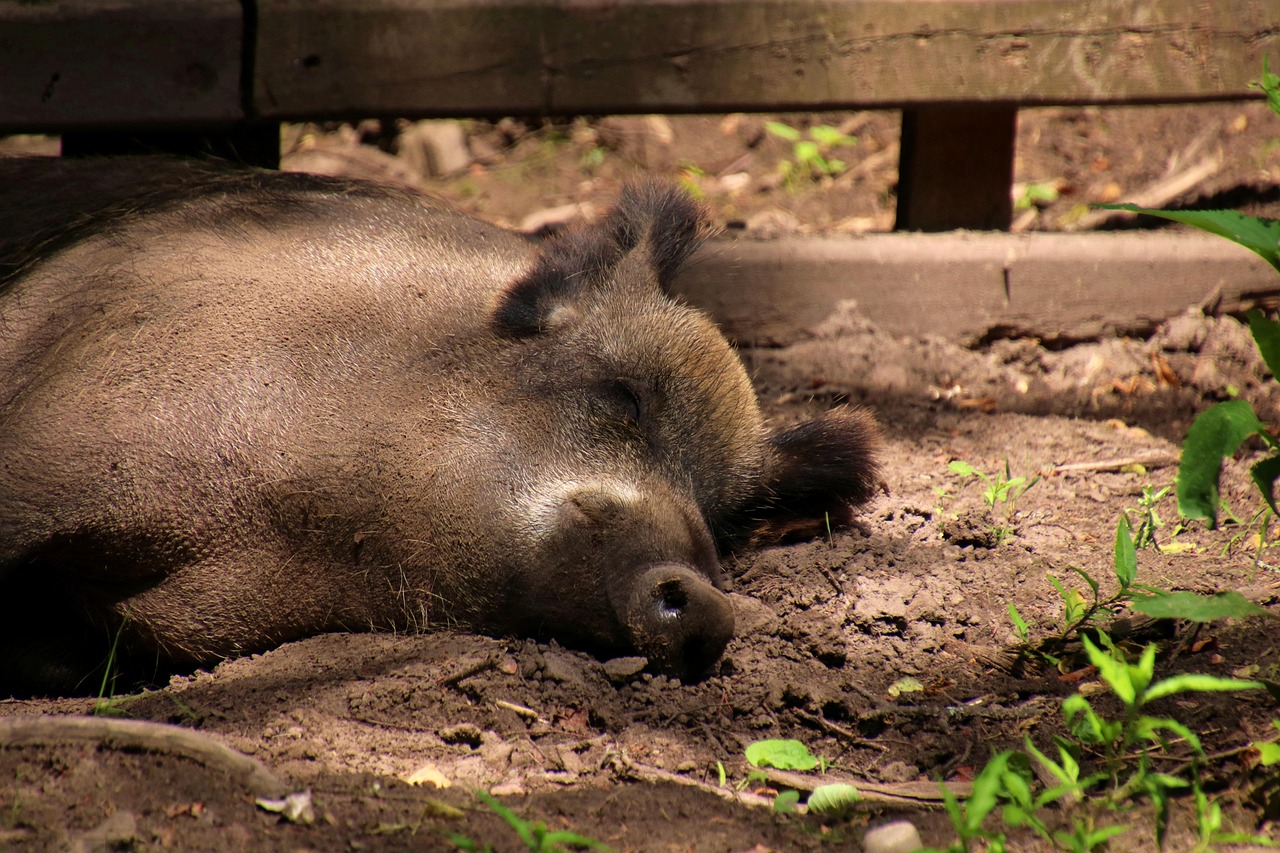
The Jabalí are a vital part of the ecosystem in the Marina Alta. Sadly, in order to keep us all healthy and safe (and that includes the jabalí) we have to endeavor to control and monitor their numbers. They have as much right to be here as us, some would say more! Right now, life is great for them. Water is plentiful, unlike last summers drought, as is food, thanks to the frequent rain showers. Last week, I had the privilege of watching a whole family crossing the river and heading up the mountain towards me. I watched for a short while, smiled, then turned around and went in the opposite direction with Sunny, grateful that he had not spotted them.